
Dhruva Space set to deploy satellite stack on ISRO’s PSLV-C62
- Repoter 11
- 08 Jan, 2026

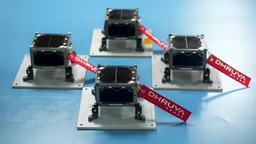
Hyderabad-based spacetech startup Dhruva Space will place a coordinated stack of satellites into sun-synchronous orbit on January 12, riding as a primary customer on ISRO’s PSLV-C62 mission.
The programme, called Polar Access-1 (PA-1), will place four satellites into orbit along with five separation systems and supporting ground infrastructure, enabling a total of ten missions for users across six Indian states and two countries.
The launch is scheduled from Satish Dhawan Space Centre, Sriharikota, for 10:17 AM IST.
Among the satellites are state and university projects such as Odisha’s CGUSAT-1, Karnataka’s DSAT-1, Assam Don Bosco University’s LACHIT-1, a school demonstration for Gujarat, and a technology demonstration for on-orbit refuelling led from Tamil Nadu.
Dhruva will also fly its own THYBOLT-3 and a small commercial satellite for an Indian next-generation earth observation customer.
Several of the satellites are designed to be accessible to the global amateur radio community, with associated training and outreach activities planned.
The company said the mission integrates its in-house satellite platforms, separation systems, and Ground-Station-as-a-Service, an offering for which it obtained IN-SPACe authorisation in 2024. That authorisation allows private firms to operate certain mission-critical ground functions and reflects the broader reform of India’s space sector, which has opened the field to non-government players since 2020.
Abhay Egoor, Co-founder and CTO of Dhruva Space, described the mission as one designed to move beyond bespoke launches.
“Polar Access-1 operationalises a structured, repeatable pathway that simplifies access to orbit while preserving mission-grade reliability,” he said.
The launch occurs during a busy period for India’s space ecosystem. ISRO’s PSLV series continues to underpin national and commercial launches and will carry larger defence and Earth-observation payloads on the same C62 mission.
At the same time, private manufacturers and operators have been moving from demonstrations to operational services. Pixxel, a Google-backed startup, began deploying hyperspectral imaging satellites and opened the first tranche of a private constellation in 2025.
Agnikul has tested semi-cryogenic and 3D-printed engine technologies in suborbital flights, signalling progress in indigenous launch capability among startups. Skyroot and others are also preparing orbital-class rockets, with maiden flights anticipated in the near term.
Leave a Reply
Your email address will not be published. Required fields are marked *